The Westchester Library System's Creative Aging Project has been a huge success, helping seniors express themselves and enjoy fulfilling, productive activities at their local libraries. It's just one more way WLS and its 38 member libraries empower their communities.
Dave Donelson distills the experiences of hundreds of entrepreneurs into practical advice for business owners and managers in the Dynamic Manager's Guides and Handbooks, a series of how-to books about marketing and advertising, sales techniques, and management strategy.
Wednesday, September 25, 2013
Creative Aging Project Shows Libraries At Their Best


Thursday, September 19, 2013
Harrison Public Library Reaches Out to Special Kids
An ongoing goal of the Harrison (NY) Public Library is to make the public library a meaningful and popular place for all children. In partnership with the Westchester Therapy Solutions (Formerly Donna Klein & Associates), the Harrison Public Library staff has been trained to better understand and serve children with disabilities. As a result of this training, the Library staff has developed a series of craft, story-time and sensory movie-time programs that will be implemented by the end of 2013.
The Kick-Off Event, “Special Program for Special Friends”, an inclusive, interactive music show, is scheduled for Friday, September 20th at 10:30am. Matt Mazur from Turtle Dance Music, LLC will lead families through 45 minutes of participatory, movement-based songs. Children will also be able to try out different instruments throughout the show.
The Library has scheduled monthly Arts and Crafts for Special Needs Kids Programs. We are inviting kids ages 3 through 5 and their parents to join us Friday, September 27th at 10:30 am for the first craft program in this series. Visiting occupational therapist from the Westchester Therapy Solutions (Formerly Donna Klein & Associates) will be available on site. Families and caregivers participation is encouraged and needed. Sign up is required. Limited to 10 families. Siblings are welcome.
Dave Donelson distill the experiences of hundreds of entrepreneurs into practical advice for business owners and managers in the Dynamic Manager's Guides and Handbooks, a series of how-to books about marketing and advertising, sales techniques, and management strategy.
Saturday, August 17, 2013
Chimps Lead the Action in Devolution

As entertaining as the mayhem might be (and it is entertaining), it actually serves to underscore the theme of the book, which is how thin the line really is between man and beast. The protagonist, Chiku Flynn, is the sixteen-year-old daughter of two deeply flawed scientists who essentially turned her upbringing over to the chimpanzees they are studying on an island in the Congo. The result is a heroine every bit as compelling as Lisbeth Salander from Stieg Larsson's The Girl with the Dragon Tattoo.
There are a raft of other characters, too, but the most interesting are the chimps. Clenott gave them distinct personalities, the ability to communicate, and individual motivations for their actions. This could have been cringe-inducing and mawkish, but he pulled it off quite well and made the primates fully believable characters.
The Congo itself plays a huge role in the novel. Having visited Central Africa myself and studied the DRC while writing my novel, Heart of Diamonds, I read Clenott's work with a particularly critical eye. My conclusion: his portrayal of the nation's tragic history and its current convoluted conflict is spot on.
Devolution is a fun, compelling read based on a fascinatingly creative premise.
Dave Donelson, author of Heart of Diamonds a romantic thriller about blood diamonds in the Congo.
Thursday, August 15, 2013
Room of Tears Ends with a Twist
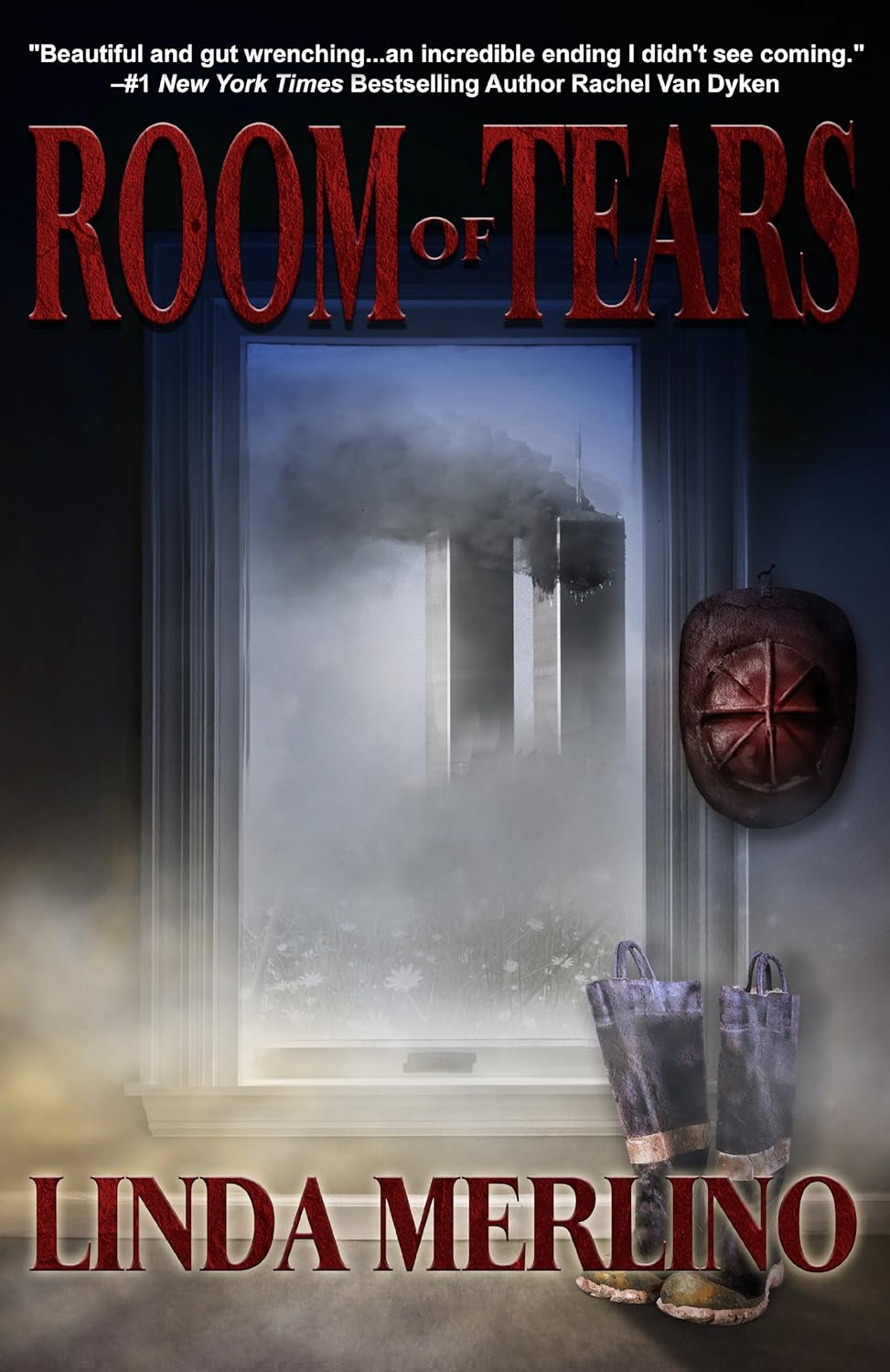
The book tells the story of Diane O'Connor, the widow of a fireman who was killed in the attack on the Twin Towers on 9/11. The narrative takes us into the future when her son, Peter, born nine months after the attack, is elected Pope--the first from America. The links between those two events feed the narrative as it moves back and forth in time. Multiple voices tell the story, too, although most of it comes from the protagonist.
Room of Tears requires some careful reading to keep track of the story, but it's well worth the effort when you come to the thought-provoking conclusion.
Dave Donelson distill the experiences of hundreds of entrepreneurs into practical advice for business owners and managers in the Dynamic Manager's Guides and Handbooks, a series of how-to books about marketing and advertising, sales techniques, and management strategy.
Tuesday, August 13, 2013
Maybe the Richest Deal Ever Made on a Golf Course
It's probably impossible to prove, but it's entirely likely that a deal spawned at St. Andrew's GC in Hastings may have been the largest ever struck on a golf course. I ran across this interesting tidbit in American Colosus: The Triumph of Capitalism 1865-1900 by H.W. Brands. The club, which celebrated its 125th anniversary this year, played an essential role in the sale of member Andrew Carnegie's steel interests to J.P. Morgan and others in 1901.
The deal was a perfect example of the role golf can play in business--not to mention the value of scoring judiciously when playing against your boss.
 |
| Andrew Carnegie playing at St. Andrew’s circa 1899. He enjoyed the game so much, he built a home next to the course // Photograph courtesy of Westchester County Historical Society |
"Louise Carnegie conspired with Schwab against her husband. Shortly after Schwab informed her of the merger scheme, she telephoned to say that Carnegie would be playing golf the next morning at St. Andrew's club in Westchester. He was always more cooperative after winning at the Scottish national sport, she suggested. Schwab took the hint, whiffed a few for the cause, and broached the subject of selling. Carnegie didn't reject the plan outright, which Schwab took to be a good sign."It was. The next morning, Carnegie named his price--$480 million. Morgan accepted it and a few days later closed the deal personally. As he shook Carnegie's hand, he said, "Mr. Carnegie, I want to congratulate you on being the richest man in the world."
At that point in time, it probably wasn't an exaggeration. The deal would be worth about $13 billion in today's dollars. That has to make it one of the biggest ever born on a golf course.
Among many other books, Dave Donelson is the author of Weird Golf: 18 tales of fantastic, horrific, scientifically impossible, and morally reprehensible golf

Tuesday, July 23, 2013
A Novel That Deserves an Audience: Room Of Tears
The protagonist, Diane O'Connor, was widowed when the South Tower of the World Trade Center collapsed at 9:59 that morning. The event destroyed the life she had planned and shattered her faith, but it didn't crush her willingness to face her fate. She kept a note hanging on her kitchen cabinet as a poignant reminder of the words she left for her husband that terrible morning. She also kept a journal of the year that followed 9/11, revealing it only because she knew her son, born nine months after that fateful day, needed to know what was in it.
Merlino says she was moved to write Room Of Tears by a chance encounter she had in 2008 in the Raleigh Durham Airport while on a book-signing tour for her first novel, Catalina Hudson (originally published as Belly of the Whale). In the airport, Merlino met a woman whose husband had been a New York City firefighter that day. He survived by chance; he had switched shifts to accommodate a doctor's appointment. "We moved down here to get away from the memories," the woman said. She went on to tell Merlino about the funerals, the widows, the waiting, and the grief. "Write your story," she said. "I may not be able to read it, but it needs to be written."
Room Of Tears needs to be read. It's a tribute to one woman's strength and a testament that miracles can really happen.
Available in eBook and trade paperback. ISBN: 978-1-927792-10-0
Dave Donelson, author of Heart of Diamonds a romantic thriller about blood diamonds in the Congo.
Thursday, July 18, 2013
Coming of Age at St. Andrews
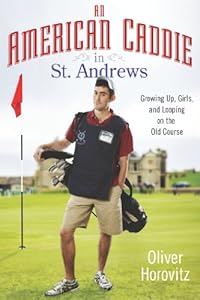
If you're a golfer looking for hole-by-hole insights into the Old Course, you'll probably be disappointed in this book. On the other hand, if you'd like to know what really goes on in the caddie shack, you'll be rewarded by the many tales Horovitz tells. As most of us have long suspected, caddies don't exactly have positive opinions of their clients. A tip less than 100% of the standard fee is generally met with disdain, for example. The caddies also have a private language for ridiculing their players--often right in front of them--to other caddies. It's not unusual for a caddie to purposely give wrong information to a player just for the sake of having a funny story to tell when they get back to the shack. Basically, two types of golfers are accorded caddie respect: scratch players and celebrities. The former gives the caddie fewer errant balls to look for and the latter gives them something to gossip about. If you don't fall into either of those categories, according to Horovitz, you're just another chump, at least as far as the caddies at St. Andrews are concerned.
There are some non-golf story elements that turn the book into a memoir of sorts. The author chases girls and catches a few, shares various bachelor-pad type apartments with other caddies, and spends one summer filming the caddies as an assignment for one of his classes at Harvard. He also develops a fond relationship with an elderly uncle who lives in St. Andrews. A recurring theme is the way he was treated by the old caddies at the course and how, over time, he earned their trust and respect.
Among many other books, Dave Donelson is the author of Weird Golf: 18 tales of fantastic, horrific, scientifically impossible, and morally reprehensible golf
Wednesday, July 17, 2013
American Triumvirate

“Snead, Nelson and Hogan set the standard for professional golf for three decades and were instrumental in defining the modern professional game,” said Robert Williams, director of the USGA Museum. “James Dodson did a masterful job not only telling the story of these three men, but also bringing an entire era of golf into sharper focus. This book is an impressive accomplishment that will undoubtedly stand the test of time.”
American Triumvirate brings to life the colorful personalities and compelling stories of three of golf’s all-time greats: Sam Snead, Byron Nelson and Ben Hogan. Interviews with friends, family and fellow competitors helped Dodson paint a picture of determined athletes, all remarkably born in the same year, 1912, who would revitalize a struggling game in Depression-era America.
Through Dodson’s expert storytelling, the reader experiences the dominance of Snead, Nelson and Hogan from the late 1930s through the 1950s. The passion, skill and competitiveness displayed by these giants of the game helped to forever change the public perception of golf and to plant it firmly in the mainstream of American life.
“This is a story about three extraordinary men, who were very different, but each helped put golf on the front pages of newspapers in America,” said Dodson. “Hogan, Nelson and Snead were the founding fathers of the modern game.”
Snead won 82 PGA Tour events, which remains the record. Six years after capturing the 1939 U.S. Open, Nelson won 11 consecutive PGA Tour events in 1945. And Hogan won four U.S. Opens, including the 1950 championship at Merion Golf Club, site of the 2013 U.S. Open.
Writer-in-residence for The Pilot newspaper in Southern Pines, N.C., Dodson also edits three arts and culture magazines published by The Pilot: PineStraw, Salt and O.Henry. Dodson, who spent two decades as a contributing editor and columnist for Golf Magazine, received the 2011 Donald Ross Award from the American Society of Golf Course Architects.
“This book was a real labor of love in the purest, best sense,” said Dodson. “Winning an award named after a mentor and friend is a huge honor for me. Mr. Wind gave me the inspiration to write the book, and called them an ‘American triumvirate.’”
The Herbert Warren Wind Book Award was established in 1987. The award recognizes and honors outstanding contributions to golf literature while attempting to broaden the public’s interest in, and knowledge of, the game of golf. Wind, who died in 2005, was the famed writer for The New Yorker and Sports Illustrated who coined the phrase “Amen Corner” at Augusta National. He is the only writer to win the USGA’s Bob Jones Award, the Association’s highest honor.
Among many other books, Dave Donelson is the author of Weird Golf: 18 tales of fantastic, horrific, scientifically impossible, and morally reprehensible golf
Tuesday, July 16, 2013
The Great Golf Swing Oil Myth

Putting the whoop-it-up factor to one side for a minute, we decided to find out just how alcohol affects your golf swing. We turned to Striano, a Titleist Performance Institute certified chiropractor and avid, low-handicap golfer, to apply some science to the question in his golf studio at Rivertowns Chiropractic in Dobbs Ferry. Under (barely) controlled conditions, we asked a dozen pretty average golfers to hit some golf balls into a net, drink a few beers, hit some more balls, drink some more beer, hit more balls, drink, hit, drink, hit, etc. The test grew a little raucous, but the goals of science were eventually served.
Striano and Keith Melnik, assistant pro at Ardsley Country Club, used some of the latest technology, the K-Vest, which plots the movement of the body during the golf swing, and the TrackMan radar system, which measures swing speed, shot distance, accuracy, and a bunch of other metrics, to analyze the groups’ performance. We used a conversion chart to estimate blood alcohol levels based on their body weight, consumption, and time spent drinking.
The guinea pigs were golfers just like you and me. They ranged in age from 25 to 64, handicaps from 0 to 25, and number of rounds played per year from 10 to 50. Every one of them said they drank while playing—at least sometimes—and most said they felt more relaxed when they did. Most of them figured a little “swing oil” improved their game although more than one confessed they really didn’t know. Or care.
Our volunteers didn’t shirk their responsibilities. They consumed anywhere from three to eight beers (yes, we were counting!) and hit 229 balls (not including warm-ups and goofing around) for the test. By the time they finished, five of them were over the DUI limit of 0.08% blood alcohol and most of the rest were really, really close to it.
The results? Not surprisingly, the more beer you drink, the worse you play. Quite frankly, though, especially considering how many of the volunteers were slurring their words and telling raunchy, pointless jokes by the end of the test, the impact on their swings wasn’t too bad. The distance they hit the ball suffered the most, with the average loss of 8.2 yards in carry using a six iron, although three of the twelve gave up more than 20 yards.
Accuracy actually improved a bit for the group after they’d had a few, at least as measured by how far the ball landed from an imaginary target. The average was about two yards closer, although five of the players got worse while seven became just slightly better—or luckier. When you combine distance and accuracy, average player performance went down by about 4% when alcohol was involved.
There was a clear correlation between blood alcohol levels and golf ability. As more pickling agent hit the blood stream, the golf swing became more erratic. Incidentally, high handicappers suffered proportionately more, as did older golfers.
Striano and Melnick analyzed the K-Vest data to see just how the golf swing responds to a suds bath. “When you start drinking, a whole lot of things happen. Beginning with alignment, the golfer becomes erratic,” Striano said. “Plus, there’s no question that there is a definite swing oil effect. Most of the guys got a lot looser and there was more turn in their hips and shoulders.” Yes, but did it help? “That made their swings longer, which actually reduced how far they hit the ball.”
We couldn’t measure the effects of beer on the golfer’s judgment, although given the way many of them were acting after a few, we suspect it doesn’t get more conservative. Carry that water hazard with this three wood off a down-hill lie? Sure—why not! Equally un-measureable was the attitude factor, although our test subjects were certainly happier at the end of the test than when they began, regardless of how—or where—they hit the ball.
Perhaps the best guidance about booze on the golf course came from a real aficionado of both, Dean Martin, who once said “If you drink, don't drive. Don't even putt.”
Among many other books, Dave Donelson is the author of Weird Golf: 18 tales of fantastic, horrific, scientifically impossible, and morally reprehensible golf
Saturday, May 25, 2013
How To Balance Existing Customers And New Prospects
Your current customers are your best single source of new business. They know you, they know your product, they have demonstrated their willingness to purchase. What’s more, you know them, you’ve learned about their needs, and you’ve invested a significant amount of your time in the success of their business. You should work to protect that investment and encourage it to grow the same way you manage your investment portfolio, making adjustments periodically to maximize the return on your investment.
Your current customers are also your company’s most profitable customers. The heavy start-up costs have been absorbed and written off already. The current customers have passed the credit checks, had their account data fed into your computer, been educated about your billing practices, learned how to use your customer support and service staffs, and otherwise incurred the typical back-office expense necessary to start doing business with a new account.
They’ve probably also passed the most expensive stage of incurring initial selling costs. You’ve used the get-acquainted offer, the short-term trial contract, and the sales promotion expense to bring them into the company. You’ve done your basic research, invested your time in preparing the initial proposals, tracked down the decision-makers, and made all the follow-up presentations to make the first sale. Once you’ve done these things, you generally don’t have to do them again. You can skip or abbreviate at least some of these time-expensive tasks.
You can concentrate on keeping the current customer happy and increase your business with them while you go about developing other new accounts. As you’ve probably guessed by now, you have to do both tasks to build a successful account list or territory. There is no rest in sales unless you decide you’re not going to grow your business both ways. And if that’s your decision, you’ll have plenty of time to rest—in the line at the unemployment office.
Dave Donelson distills the experiences of hundreds of entrepreneurs into practical advice for business owners and managers in the Dynamic Manager's Guides and Handbooks, a series of how-to books about marketing and advertising, sales techniques, and management strategy.
Subscribe to:
Posts (Atom)


 Posts
Posts


