Showing posts with label book review. Show all posts

Saturday, August 17, 2013

Chimps Lead the Action in Devolution

Action rules in Peter Clenott's Devolution, the story of a teenage girl raised by chimpanzees. The book is peopled by interesting characters and plays out against a well-described setting, but it depends on a rising crescendo of fist fights, gun battles, and ferocious attacks by wild animals (and humans) to propel the reader through the story.

As entertaining as the mayhem might be (and it is entertaining), it actually serves to underscore the theme of the book, which is how thin the line really is between man and beast. The protagonist, Chiku Flynn, is the sixteen-year-old daughter of two deeply flawed scientists who essentially turned her upbringing over to the chimpanzees they are studying on an island in the Congo. The result is a heroine every bit as compelling as Lisbeth Salander from Stieg Larsson's The Girl with the Dragon Tattoo.

There are a raft of other characters, too, but the most interesting are the chimps. Clenott gave them distinct personalities, the ability to communicate, and individual motivations for their actions. This could have been cringe-inducing and mawkish, but he pulled it off quite well and made the primates fully believable characters.

The Congo itself plays a huge role in the novel. Having visited Central Africa myself and studied the DRC while writing my novel, Heart of Diamonds, I read Clenott's work with a particularly critical eye. My conclusion: his portrayal of the nation's tragic history and its current convoluted conflict is spot on.

Devolution is a fun, compelling read based on a fascinatingly creative premise.

Dave Donelson, author of Heart of Diamonds a about in the

Thursday, August 15, 2013

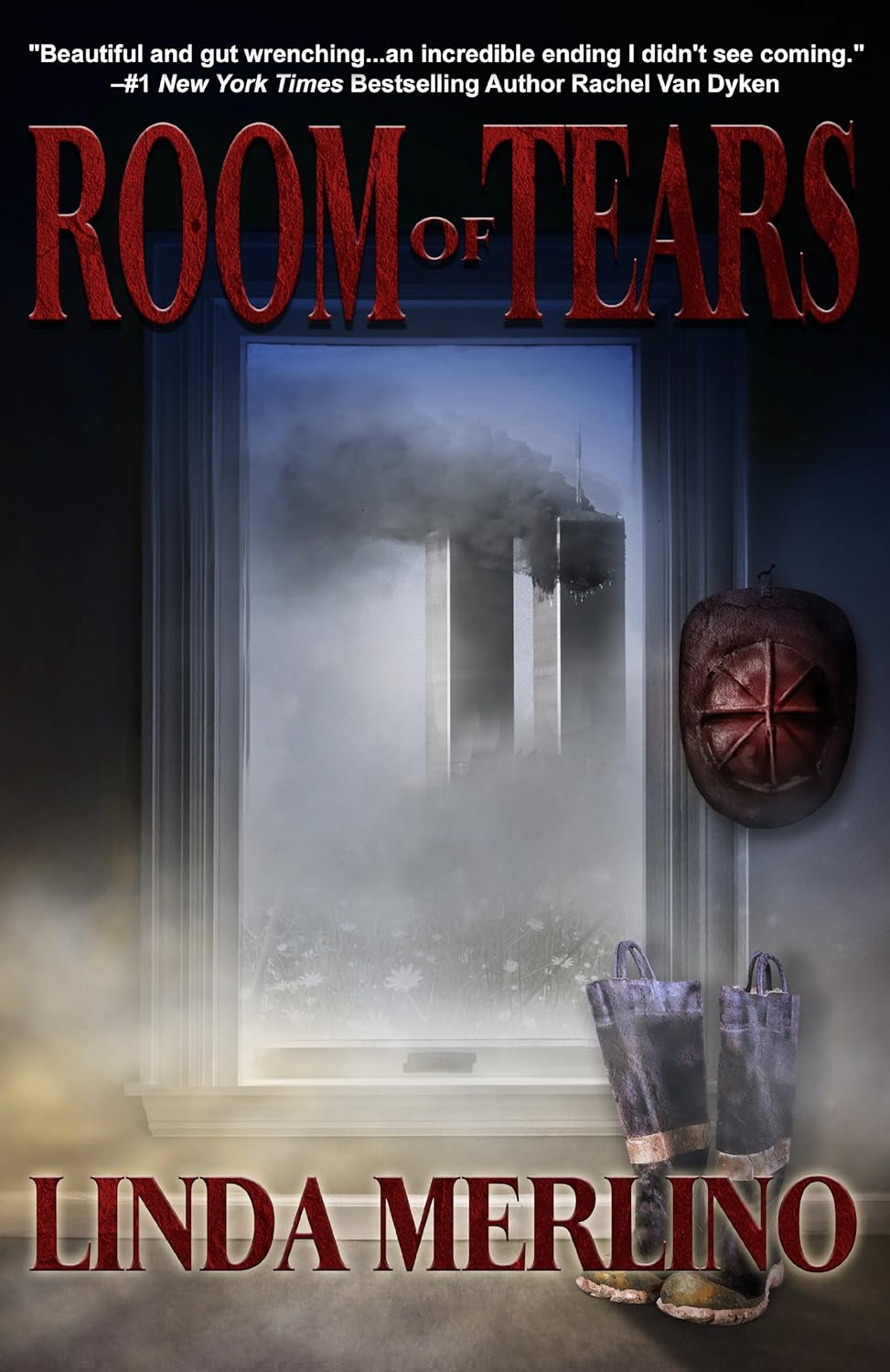
Room of Tears Ends with a Twist

Room of Tears has one of the most creative "hooks" for a novel you'll ever encounter. Author Linda Merlino took what could have been a 9/11 weeper and turned it into an engrossing tale with a fascinating twist to the ending. You'll find no spoiler here; suffice it to say that you'll never see it coming and the concept will set you back on your heels.

The book tells the story of Diane O'Connor, the widow of a fireman who was killed in the attack on the Twin Towers on 9/11. The narrative takes us into the future when her son, Peter, born nine months after the attack, is elected Pope--the first from America. The links between those two events feed the narrative as it moves back and forth in time. Multiple voices tell the story, too, although most of it comes from the protagonist.

Room of Tears requires some careful reading to keep track of the story, but it's well worth the effort when you come to the thought-provoking conclusion.

Dave Donelson distill the experiences of hundreds of entrepreneurs into practical advice for business owners and managers in the Dynamic Manager's Guides and Handbooks, a series of how-to books about marketing and advertising, sales techniques, and management strategy.

Tuesday, July 23, 2013

A Novel That Deserves an Audience: Room Of Tears

The tragedy of 9/11 has spawned countless books, but author Linda Merlino tackled the difficult task of telling a remarkable story that occurred in the aftermath of that horrible day. Merlino's new novel, Room Of Tears, is the gripping tale of a firefighter's widow and her astounding life after the attack, told from a unique vantage point.

The protagonist, Diane O'Connor, was widowed when the South Tower of the World Trade Center collapsed at 9:59 that morning. The event destroyed the life she had planned and shattered her faith, but it didn't crush her willingness to face her fate. She kept a note hanging on her kitchen cabinet as a poignant reminder of the words she left for her husband that terrible morning.  She also kept a journal of the year that followed 9/11, revealing it only because she knew her son, born nine months after that fateful day, needed to know what was in it.

Merlino says she was moved to write Room Of Tears by a chance encounter she had in 2008 in the Raleigh Durham Airport while on a book-signing tour for her first novel, Catalina Hudson (originally published as Belly of the Whale). In the airport, Merlino met a woman whose husband had been a New York City firefighter that day. He survived by chance; he had switched shifts to accommodate a doctor's appointment. "We moved down here to get away from the memories," the woman said. She went on to tell Merlino about the funerals, the widows, the waiting, and the grief. "Write your story," she said. "I may not be able to read it, but it needs to be written."

Room Of Tears needs to be read. It's a tribute to one woman's strength and a testament that miracles can really happen.

Available in eBook and trade paperback. ISBN: 978-1-927792-10-0

Dave Donelson, author of Heart of Diamonds a about in the

Thursday, July 18, 2013

Coming of Age at St. Andrews

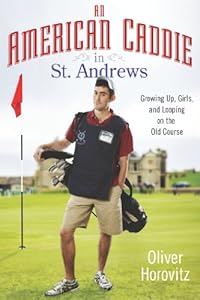
An American Caddie In St. Andrews
At least once in their life, every golfer should make the pilgrimage to the Old Course in St. Andrews. Oliver Horovitz not only made that trip, he turned it into a coming-of-age book about his experiences working as a caddie there during his college years. An American Caddie in St. Andrews is an enjoyable, light read that covers the young man's summers looping on the Old Course while completing his education at Harvard, chasing girls, and pub crawling through the ancient town.

If you're a golfer looking for hole-by-hole insights into the Old Course, you'll probably be disappointed in this book. On the other hand, if you'd like to know what really goes on in the caddie shack, you'll be rewarded by the many tales Horovitz tells. As most of us have long suspected, caddies don't exactly have positive opinions of their clients. A tip less than 100% of the standard fee is generally met with disdain, for example. The caddies also have a private language for ridiculing their players--often right in front of them--to other caddies. It's not unusual for a caddie to purposely give wrong information to a player just for the sake of having a funny story to tell when they get back to the shack. Basically, two types of golfers are accorded caddie respect: scratch players and celebrities. The former gives the caddie fewer errant balls to look for and the latter gives them something to gossip about.  If you don't fall into either of those categories, according to Horovitz, you're just another chump, at least as far as the caddies at St. Andrews are concerned.

There are some non-golf story elements that turn the book into a memoir of sorts. The author chases girls and catches a few, shares various bachelor-pad type apartments with other caddies, and spends one summer filming the caddies as an assignment for one of his classes at Harvard. He also develops a fond relationship with an elderly uncle who lives in St. Andrews. A recurring theme is the way he was treated by the old caddies at the course and how, over time, he earned their trust and respect.

Among many other books, Dave Donelson is the author of Weird Golf: 18 tales of fantastic, horrific, scientifically impossible, and morally reprehensible golf


Tuesday, December 18, 2012

Common Sense And The Rules Of Golf

Golf: A Game For Life
Gene Westmoreland writes about more than just the rules of golf in A Game For Life, his collection of essays about a subject he knows better than just about anybody.  The book, proceeds of which will be donated to the MGA Foundation, gives us not only insights in the sometimes bewildering rules of the game but also into what makes it one of the best ways to enhance your life.

That may sound like heady stuff, but Westmoreland is anything but a stuffy philosopher. His writing is easy, his approach to the subject is thorough without being pedantic, and his outlook on the game is not so much reverntial as appreciative. He makes a great case for playing by the rules but doesn't hesitate to loosen them up a bit to make the game more fun for duffers just out to enjoy a walk in the sunshine. I've played a round or two with the man, and can attest that his attitude toward the game made every one of them a pleasure.

That attitude carries over into Westmoreland's explanation of the rules of golf, most of which are not only spelled out in clear English but illustrated with incidents many of us have seen either in person or while watching the pros on TV. He does this particularly well in situations that can be rather confusing, like encountering loose obstacles in a hazard. Can you move them? No. Are you penalized if you move, say, a twig in a bunker during your swing? Again, the answer is no. Westmoreland points out, though, that your "swing" doesn't include your backswing! So, if you touch that twig during your takeaway, you've added two strokes to your score. He illustrates the concept by recalling the penalty Brian Davis called on himself during a playoff with Jim Furyk at Harbour Town:
"The TV announcers correctly quoted Rule 13-4, but misunderstood the definition of a stroke, for while it is okay to touch a loose impediment during the stroke, Brian touched it on his backswing."
Nearly every rule examined in A Game For Life has a real-life example that makes it easier to understand and Westmoreland's career in the game has given him thousands of such examples from which to choose. He has been an active member of USGA Championship Committees, serving as co-chairman of the 2004 U.S. Amateur and the 2006 U.S. Open. His service as the Metropolitan Golf Association's Tournament Director for many years (among other accomplishments) led the MGA to christen the trophy for its premiere event, the Met Open, the Westmoreland Cup. In A Game For Life, Gene Westmoreland speaks with both common sense and authority.

Among many other books, Dave Donelson is the author of Weird Golf: 18 tales of fantastic, horrific, scientifically impossible, and morally reprehensible golf

Friday, October 19, 2012

Dave Pelz Putting Games

Dave Pelz Putting Games
The day before I read Dave Pelz's Putting Games, I played in a scramble where all four members of my team--none with a handicap over ten--missed the same basically straight five-foot birdie putt. As you might imagine, I opened Pelz's book with more than average interest. I wasn't disappointed.

Putting Games is all about developing the skills to make more putts. The first section is diagnostic, the second covers stroke mechanics like aim and face angle, while the third is about developing touch and feel. Pelz painstakingly describes seven games you should play to measure your performance so you can map a route to improvement. They are all played with twelve balls and address nearly every putting circumstance from the dreaded three-footer to sixty-foot lags.

As you would expect given Pelz's background as a NASA scientist and perhaps the most data-driven golf instructor in the business, the "games" rely heavily on measurement and data analysis. they also make extensive us of some of the many training aids Pelz sells. This approach will clearly appeal to analytic golfers, but the games will also help more "feel" players improve their putting performance as well.

Among many other books, Dave Donelson is the author of Weird Golf: 18 tales of fantastic, horrific, scientifically impossible, and morally reprehensible golf

Saturday, October 6, 2012

Master The Short Game With Dave Stockton

Dave Stockton Unconscious Scoring

I got quite a lot from reading Dave Stockton's book, Unconscious Putting, probably because the master's approach very much mirrors mine: see the hole, role the ball into it. Sweet and simple. I consider myself a pretty good putter but not a great one, though, because I still don't have as many one-putts as I need to really get the putt count down. That's where Stockton's latest book, Unconscious Scoring, is helpful.

Why? Because one-putts come mostly from hitting your approach shot closer to the hole in the first place. That's what Unconscious Scoring is all about. Again, I really, really identify with Stockton's KISS (Keep It Simple, Stupid) philosophy.

Stockton says you only need two basic shots around the green to produce a fabulous short game--a low shot and a high shot. After explaining why this approach will work for players at all handicaps, he shows how to hit each one in two clearly-illustrated chapters.

Next, he carries these principles into various situations where he demonstrates how you don't need to create a whole new swing to get up and down every time you face a tough lie. Stockton covers numerous trouble shots--from a bunker, hardpan, a divot, off a side-hill, etc.--with some elementary modifications of his basic two-shot repertoire. The book is rounded out with chapters on the Mental Game, Practice, Equipment, and Putting.

The material in Unconscious Scoring came from Stockton's excellent five-major-championship career as well as his work with world-class players like Phil Mickelson, Annika Sorenstam, Yani Tseng, and Rory McIlroy, who also wrote the foreword for the book.

Among many other books, Dave Donelson is the author of Weird Golf: 18 tales of fantastic, horrific, scientifically impossible, and morally reprehensible golf
Thursday, September 27, 2012

Smart Golf Lowers Scores

The Five Inch Course by John Lloyd Retzer
John Lloyd Retzer tells it like is on both GolfBlogger.com and in his new pull-no-punches golf instruction book, The Five Inch Course: Thinking Your Way To Better Golf. The book resonated with me because I've played, studied, and written about the game for more than four decades so I don't have any more delusions about my game. The majority of golfers, though, will probably read The Five Inch Course and decide its lessons really don't apply to them. All they need is another $400 driver, a few more hours of the Golf Channel, and another great swing tip from the attendant at the gas station, and they'll shoot par every time. Who knows? Maybe the Champions Tour is within reach!

It's not, of course, mainly because the majority of golfers won't play the intelligent take-fewer-chances brand of golf Retzer espouses. And that's a shame, really, because we could all play much better golf if we just dialed back our testosterone and followed his advice to adopt realistic expectations, play within ourselves, and stop pretending we can make a 160 wedge shot bend backwards out of the trees just like Bubba Watson. I rant about many of the same topics in Weird Golf.

Retzer hooked me in his introduction when he said:
"...this doesn't mean that lower scores are out of your reach. It just means that you have to play better golf with the swing you already have." 
He goes on to remind us that
"Four ugly strokes equal four pretty ones [on the scorecard]." 
His goal throughout the book is to teach us to work our way around the course in the least number of strokes, not with the longest drive. That often means leaving the driver in the bag, laying up on that long par four so you take double bogey out of the equation, and maybe even bunting a low runner 120 yards down a narrow fairway instead of taking a full swing that brings OB into play.

Retzer says some of his buddies call this "old man golf." I call it "smart golf."

The Five Inch Course is a collection of short mental game tips organized into chapters on practical topics like what to do before you play, how to think about what you're doing on the tee, what should be going through your mind in the fairways, and common-sense ways to save strokes on and around the green. The style is straightforward and highly readable with a bit of humor thrown in here and there.

Retzer's approach doesn't preclude taking risks or attempting that one-in-a-hundred shot over the water to a tight front pin. He just reminds us that we're going to be really, really sorry if we play that way on every shot in every round. Have some fun, he says, but remember that conservative play is the way to lower your score.

Among many other books, Dave Donelson is the author of Weird Golf: 18 tales of fantastic, horrific, scientifically impossible, and morally reprehensible golf
Tuesday, June 12, 2012

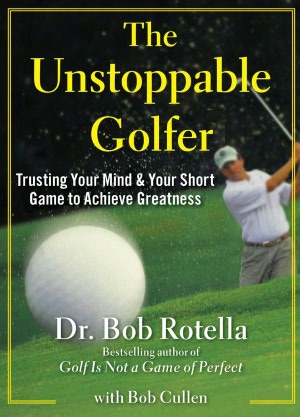
Dr. Bob Rotella Conquers The Mental Short Game

I love the short game in golf. There's no question that striking a full shot is satisfying and momentarily rewarding, but quite frankly there's a certain sameness to it that fails to hold interest very long. The short game, though, is predicated on variety. Chips, pitches, bunker blasts, bump-and-runs, digging a ball out of the collar of rough a dozen feet from the pin--every shot is different, every shot makes you think, and every shot really, really counts. And then there is putting, which is the most nerve-wracking of all.

In The Unstoppable Golfer, Dr. Bob Rotella, golf psychologist to stars like Keegan Bradley, Padraig Harrington, and Darren Clarke, says, "...nearly all golfers have the physical ability required to pitch the ball, to chip it, to putt it. If we're not doing those things, It's because we're somehow stopping ourselves." In other words, we get in our own way.

Rotella says it's often fear that crowds our minds, pushing and shoving its way and calling out for negative images, contradictory swing thoughts, and herky-jerky responses. The solution? To achieve a state of calm by focusing on one thing: the hole.

He couldn't be more right, of course. If you focus on your target, visualize the ball getting there, and commit to a play based on belief in its success, you're more than half-way to a great short game. Rotella fills the book with stories of his students (patients?) who learned to quiet their minds and let their instincts lead them to better golf. He covers no swing mechanics, but does break down how your mind should work when faced with typical short game situations like pitch shots over hazards, getting up and down from a bunker, and lining up long putts to go in rather than just lag close. He has a special section on the "yips" in which he discounts the theory that there's some physical cause behind them but offers instead a solid, results-proven method to mentally overcome them.

The short game is the scoring game, according to nearly every golf guru I've ever talked to. You can drive the ball 340 yards, but if you can't get it in the hole, you can't put birdies and pars on your scorecard. Dr. Bob's book will help.

Among many other books, Dave Donelson is the author of Weird Golf: 18 tales of fantastic, horrific, scientifically impossible, and morally reprehensible golf
Monday, May 21, 2012

Bill Pennington's Golf Book That (Almost) Saved My Life

In the interests of full disclosure, I must confess that I owe Bill Pennington my life, or at least the use of my limbs. A couple of years ago, after more than forty years playing golf, I suddenly lost my ability to putt. It didn't just have the yips. I had the yaws, the yahoos, and the you've-got-to-be-kidding-mes. I tried a dozen different putters including some that were clearly not legal. I putted cross-handed, one-handed, and would have putted no-handed if I could have figured out how to hold the putter in my teeth, but I still counted as many as 45 putts on some rounds. I was about to give up the game and take up a sane sport like chainsaw juggling when I read Pennington's NY Times column about putting while looking at the hole instead of the ball. That column saved my game, not to mention my fingers.

So is this an unbiased review? Mostly.

In On Par: The Everyday Golfer's Survival Guide, Pennington writes about golf in a way that resonates with the regular golfer. The subtitle notwithstanding, this isn't a golf instruction book. It's more of an extended, rambling conversation about the game like the ones you have with your buddies at the nineteenth hole. The difference is, Pennington knows what he's talking about, whereas your buddies....

On Par is full of gentle, self-deprecating humor and dozens if not hundreds of little stories that illustrate the beautiful ironies of golf. Like a conversation he had once with Gary Player about how humiliating it is to hit a ball into the water. Or the time he almost killed the club president's wife with an errant six iron, a club selection that reminded me of the story in Weird Golf that begins "Just ask the guy in the tenth fairway staring at the six iron covered in blood." Pennington also reveals how jealous Annika Sorenstam is of her sister Charlotta, who won only one pro tournament but has three times as many holes in one. In other words, if you're looking for a book to fix your slice, look elsewhere.

There's plenty here to enjoy and learn from without pages full of illustrated swing tips. Pennington writes about nine places every golfer should play (hint: it's not a list of courses), what the pros are like and how they got that way, and one particularly distressing chapter titled "Shanks, Choking, and Other Tales of the Dark Side." Oh, and there's a section about putting while looking at the hole that you don't want to miss.

More than anything, I think, On Par expresses an attitude about golf that more of us should have. As Pennington says, "It is a silly game, somewhat childish....The allure of golf is its simplicity, which leads to a thousand complexities." And more than a few laughs along the way.

Among many other books, Dave Donelson is the author of Weird Golf: 18 tales of fantastic, horrific, scientifically impossible, and morally reprehensible golf

Saturday, July 30, 2011

Tinkers, A Deathbed Story Of Fathers And Sons

This fine novel is ostensibly about the death of George Washington Crosby, an old man who lies dying of cancer in his living room while his family keeps watch. But the book isn't about George's death; that simply provides the framework for the real story, which is about his unsteady relationship with Howard, his father. While Paul Harding takes the reader into that theme through George's deathbed recollections (and possibly hallucinations) he develops it in a parallel narrative told from Howard's point of view. The story arc can be confusing, but it's clear when the reader pays attention. It's well worth the effort, too.

Tinkers worked for me on many different levels. Harding immerses the reader into the dying man's stream of consciousness, a flow of thought/feeling/dreams that I suspect is very realistic. At times George is lucid, recalling notable incidents of triumph and tragedy from his life as clearly as a newspaper reporter. Often, though, he slips into prose poems that seem to have little bearing on the story but perfectly reflect the semi-dreaming state of his mind. Some readers may find these passages overwrought or superfluous; I thought they contribute to a greater understanding of the way a dying man's mind conducts itself.

The strange workings of Howard's mind often intrude on the storyline, too. Despite these forays into sub- or semi-conscious thought, I found the characters well-defined, believeable, and sympathetic if not always totally likeable. In other words, George, Howard, and George's grandfather (who makes a cameo near the end) are just like real people. And, just like real fathers and sons, their relationship are very complicated, reminding me often of the paternal ties explored in my own short fiction collection, A Tale Of The Christ. The value of the novel lies in its ability to increase our understanding of ourselves.

Tinkers may be a short book, but it is not a light read. Not because the subject matter is heavy, but because there are layers upon layers of meaning piled on the reader who takes the time to appreciate it. I plan to return to Tinkers again and again and expect to find at least one hard new truth every time I read it.

Dave Donelson distills the experiences of hundreds of entrepreneurs into practical advice for small business owners and managers in the Dynamic Manager's Guides, a series of how-to books about marketing and advertising, sales techniques, hiring, firing, and motivating personnel, financial management, and business strategy.

Monday, June 13, 2011

Help For Golfers

Like nearly 90% of all golfers, I've spent way too much time in the right rough--or worse. The slice, as you probably know, is the biggest single fault in most golfers' games. But now you can banish your banana ball with the help of my friend Brian Crowell and his new book, Slice-Free Golf In Three Easy Steps.

I had the pleasure of working on this book with Brian, handling the photography and design among other things, and in the process I learned a lot about my golf swing. It was kind of like having a three-month golf lesson with one of the top teaching pros in the country. You can get the same kind of advice I did--and get more control over your game--with the simple lessons Brian teaches and the drills he uses to help you hit the ball straighter and farther.

Slice-Free Golf doesn't have any gimmicks, but there does seem to be a little magic in the way Brian explains his system for the set-up, swing, and follow-through that will lower your scores. He also uses an unconventional approach to somethings most golfers take for granted. When it comes to set-up, for example, Brian doesn't start with the grip, but with alignment. Makes sense, doesn't it? How can you aim the club face until you know for sure where to point it?

Then there is the swing itself. Like all great teachers, Brian has the ability to create images that stay in the pupil's mind. His "eye in your chest" is a fabulous reminder to keep your shoulders slightly closed through impact in order to hit your shot with a little draw spin.

Slice-Free Golf has over 200 images like these that you can mentally call up when you need them. If you need a little tangible reminder, there's a cut-out page you can use at the range--or even on the course--to remind you of the specifics of the slice-free swing. There are also over two dozen drills Brian has developed over the years to help ingrain good swing habits in the thousands of golfers he's taught.

But don't just take my word for it. Here's what all-time-great Gary Player had to say about Slice-Free Golf:
"Don’t let the slice diminish your enjoyment of this great game. If cutting the ball is frustrating you, please read Slice-Free Golf. Your score will improve and you’ll have more fun on the links. My friend Brian Crowell can help you to get the most out of your swing. He is an accomplished PGA instructor who has a very clear and comfortable way of communicating with his students. Slice-Free Golf is proof of both his effectiveness as a teacher and Brian’s hatred of the dreaded slice."
For more information about how you can banish your banana ball, visit www.slicefreegolf.com. You can get your copy of Slice-Free Golf directly from the publisher or your favorite bookseller. It's also available as an ebook for Amazon Kindle, Barnes & Noble Nook, and other devices.

In addition to writing about golf, Dave Donelson distills the experiences of hundreds of entrepreneurs into practical advice for small business owners and managers in the Dynamic Manager's Guides, a series of how-to books about marketing and advertising, sales techniques, hiring, firing, and motivating personnel, financial management, and business strategy.

Tuesday, May 10, 2011

Congo Explained

If you want to understand the tragedy that is the Democratic Republic of Congo, put aside the mythology and read Dancing In The Glory of Monsters. Jason Stearns has untangled the snarling mess that is the history of this sad nation.

As someone who's researched and written about the Congo myself, I found new insights into the interminable conflicts that have wracked the country for it's entire modern history. Stearns clearly delineates the players, putting them into context and showing how they interacted to make the Congo what it is today. He carefully explains the role of Rwanda's Paul Kagame and other outsiders in the turmoil, but also delineates the power hunger and short-comings of the Congo's own leaders, including current President Joseph Kabila.

Most importantly, Stearns shows how there is no one single cause of the Congo's troubles. He calmly shows how tribal rivalries fuel the strife just as much as the struggle to control the country's mineral wealth. He explains how the internal politics of Zimbabwe, Uganda, Angola, and other countries in addition to Rwanda led to their deep involvement in the DRC's wars. While he rightfully deplores the epidemic of rape in the Congo, he puts it in context and doesn't dwell on it--not because it's not important, but because there's much more to the story.

I found it refreshing that Stearns resists the impulse to blame rapacious multinational corporations for much of anything except trying to find a way to do business in the Congo. He doesn't ignore the many shortcomings of most of the deals to exploit the Congo's riches, but correctly points out that most of them were struck by Congolese leaders eager to fund their own ambitions. He leaves the conspiracy theories to other, less informed writers.

Dancing In The Glory Of Monsters is an objective, clear-eyed look at one of the greatest ongoing tragedies in modern history.

Dave Donelson distills the experiences of hundreds of entrepreneurs into practical advice for small business owners and managers in the Dynamic Manager's Guides, a series of how-to books about marketing and advertising, sales techniques, hiring, firing, and motivating personnel, financial management, and business strategy.

Amateur Golf's Last Hurrah

Could two amateur golfers beat two of the world's greatest professionals? Once upon a time, they might. Mark Frost tells the story of just such a contest in his account of The Match: The Day The Game Of Golf Changed Forever. But this isn't a fairy tale. It is instead a can't-put-it-down true account of a high-stakes game played in 1956 on one of golf's most spectacular courses by four of the game's legendary competitors.

Ben Hogan and Byron Nelson are the pros. They have fourteen major championships between them. Coming from the same caddie yard, the once-close competitors haven't spoken in years--but they teamed up to face the two leading amateurs of the day, Harvie Ward and Ken Venturi. Both of these young men competed at the highest levels of the game in the hallowed tradition of Bobby Jones. As a match-play team, they had never been defeated. The venue for the match? Storied Cypress Point, whose fairways follow craggy cliffs and rocky promontories swept by the winds of the Pacific while the ocean crashes below.

Frost lays out the play stroke by stroke, pacing the narrative with revealing histories of the players and other notables inolved in the day. He puts the game into context, pointing out that this day marked the end of the amateur era and the ascendance of the professional. While the match itself is compelling, the after-stories make fascinating reading, too, especially for those of us interested in the history of our great game.

Dave Donelson distills the experiences of hundreds of entrepreneurs into practical advice for small business owners and managers in the Dynamic Manager's Guides, a series of how-to books about marketing and advertising, sales techniques, hiring, firing, and motivating personnel, financial management, and business strategy.

Friday, April 15, 2011

Where's The Public In Public Relations?

Putting The Public Back In Public Relations

There is a lot of "why" but very little "how" in this book that bills itself as being about the transformation of the public relations industry brought about by Web 2.0. Page after page describes how social media are supposedly dictating new priorities and practices for PR professionals and their clients. While there is certainly much validity to the author's claims for the growing influence of social media, there is a distinct shortage of practical advice on how the reader is supposed to use it.

Unfortunately, the few recommendations the authors do make sound like they were written by PR practitioners (which, of course, they were). "Engage the bloggers" and "have conversations" are about as specific as the advice gets, with few examples of exactly what those bromides mean. Much is made of the need for one-on-one communication rather than scatter-shot distribution of press releases, but there is absolutely no explanation of how this is supposed to be done in a time-efficient manner.

What's really missing is a hint of how PR campaigns built on social media platforms are supposed to reach the great unwashed--the non-techie consumer (millions and millions of them) who never blog, tweet, or even look at the Facebook page their kids set up for them. Publicizing the latest chipset for tablets via Gizmodo may well be the way to go, but how do you sell Buicks online?


Dave Donelson distills the experiences of hundreds of entrepreneurs into practical advice for small business owners and managers in the Dynamic Manager's Guides, a series of how-to books about marketing and advertising, sales techniques, hiring, firing, and motivating personnel, financial management, and business strategy.

Sunday, February 20, 2011

Engaged Employees Are Motivated Employees

As a consultant and entrepreneur who has worked with thousands of business owners, managers, and their employees to help them achieve corporate and personal growth, I was captivated by the opening exercise in the engaging book. By asking a simple question, the authors demonstrate the book's premise, that nothing is more important to the organization or the individual than engagement with their work.

It's easy for the business owner to accept this concept. They know that productivity increases and profits grow in direct relationship to the devotion of the workforce to performance. Given the demise of job security in today's economy,however, it's a lot more difficult for the employee to recognize the value of engagement to them. Karsan and Kruse spend most of the book making that case to employees and showing employers how to change their organizations so that they can reinforce it in daily operations.

Their premise is based on findings from millions of worker surveys done on behalf of their clients. Most of the case studies and anecdotal material comes from the same source. While this could have turned the book into a thinly-veiled ad for their businesses, it doesn't read that way at all. The concepts and research are presented openly, as are actionable items that could easily have been hidden behind "hire me and I'll tell you."

I was particularly intrigued by the way the book is integrated into a website full of bonus material like videos, activities, exercises, and other value-added features. Each chapter ends with a one-page summary of key takeaways for both managers and employees that can be printed as a pdf from the website for future reference. Bonus material includes videos by the authors and others that expand on the concepts presented in each chapter. The website provides a great deal of extra value for the reader.

Dave Donelson distills the experiences of hundreds of entrepreneurs into practical advice for small business owners and managers in the Dynamic Manager's Guides, a series of how-to books about marketing and advertising, sales techniques, hiring, firing, and motivating personnel, financial management, and business strategy.

Sunday, February 13, 2011

Irrational Behavior Is Perfectly Explainable--Or Is It?

Despite what the economists would have us believe, there is little about human behavior that is rational. Dan Ariely's fascinating experiments prove that time and time again and, as a consultant, I can attest to the veracity of his conclusions. I've seen dozens of compensation plans for employees, for example, and many of them--especially those aimed at salepeople--are designed to give the employee incentives to work more, harder, more productively, etc. Most of these plans fail to produce the desired results completely, or at best, achieve some of the goals while creating some completely unexpected outcomes, usually much to the chagrin of management. Ariely understands why that happens, and explains it in an entertaining, accessible style that makes this book a winner.

Dave Donelson distills the experiences of hundreds of entrepreneurs into practical advice for small business owners and managers in the Dynamic Manager's Guides, a series of how-to books about marketing and advertising, sales techniques, hiring, firing, and motivating personnel, financial management, and business strategy.

Friday, January 28, 2011

How To Use New Media To Reach New Customers

I'm not so sure there are actually new rules for marketing and public relations as much as there is new technology to use to apply the old ones, but David Meerman Scott does an excellent job of telling you how to do it. His advice to "target a specific audience," for example, is certainly not a new concept to marketing professionals. In fact, I spend a great deal of time on that subject in The Dynamic Manager's Guide To Marketing and Advertising. The way he applies the rule to social networking sites like LinkedIn, however, is definitely worth exploring. The book is particularly useful when it comes to helping the technical novice understand such basic tools as RSS feeds and YouTube videos. The author's insistence that the marketer build an online presence around useful, unobtrusive content is particularly appealing.

Dave Donelson distills the experiences of hundreds of entrepreneurs into practical advice for small business owners and managers in the Dynamic Manager's Guides, a series of how-to books about marketing and advertising, sales techniques, hiring, firing, and motivating personnel, financial management, and business strategy.

Wednesday, January 19, 2011

The Psychology Of Persuasion Supports Effective Marketing Plans

The place to look for an explanation of why your marketing plans work or don't work, look deep into your prime customer's head. That's where Robert Cialdini takes you in this classic work on persuasion that will show you not only why behavior can be altered, but how to do it.

The author, Robert Cialdini, is a professor of marketing at Arizona State as well as president of a consulting company specializing in ethical persuasion. He's also a highly capable writer on what can be a confusing topic. Unlike my book on the subject, The Dynamic Manager's Guide to Marketing and Advertising (which draws heavily from the stories of business owners), some of the material here might be a little technical for the casual reader, but the serious business reader will find it worth the effort. Marketers, sales people, and managers of all stripes should take the time to understand the concepts in this substantive work.

Dave Donelson distills the experiences of hundreds of entrepreneurs into practical advice for small business owners and managers in the Dynamic Manager's Guides, a series of how-to books about marketing and advertising, sales techniques, hiring, firing, and motivating personnel, financial management, and business strategy.

Sunday, January 16, 2011

Black Swan Green - A Classic Of The Genre

Black Swan Green is a lyrical coming of age novel less noteworthy for its character and plot points than for its exemplary use of language to strike at the reader's heart. David Mitchell makes precise word choices and smoothly melds them into phrases and sentences that are greater than the sum of their parts. He's like a Wall Street hedge fund manager boldly using leverage to increase the reader's return on investment. He should be studied by every writer who wants to learn from one of the best.


In this book, Mitchell writes in the voice of a middle-class British school boy, using idioms and slang that may be a little off-putting at first. The slight effort to comprehend them is worth it, though, because it makes the casual reader show down a bit and enjoy the writing itself. From lyrical descriptions to crackling dialogue and heart-thumping exposition, Mitchell does it all well:

"I peered through Dad's razor-sharp blind, over the glebe, past the cockrel tree, over more fields, up to the Malvern Hills. Pale morning, icy sky, frosted crusts on the hills, but no sign of sticking snow, worse luck."

None of this is to say the story itself isn't compelling, although it's driven by mostly standard preteen angst. The protagonist, Jason Taylor, faces not only the usual afflications of puberty--unrelenting bullies, twittering girls, and a mountain of self-doubt--but a gut-twisting stammer that rules his inner life. His parents are engaged in a drama of their own, more sensed than seen, and outside events like the Falklands War and a local hate campaign directed at Gypsies add to the tensions in the story and flesh out the world he inhabits.

In addition to Catcher in the Rye, Black Swan Down will rank among the classic coming of age novels like A Separate Peace, A Boy's Life, and The Yearling. I suspect it is a book I'll come back to time and time again.

Dave Donelson distills the experiences of hundreds of entrepreneurs into practical advice for small business owners and managers in the Dynamic Manager's Guides, a series of how-to books about marketing and advertising, sales techniques, hiring, firing, and motivating personnel, financial management, and business strategy.